Families
Support for parents and family members to understand communication, access and participation across everyday routines.
Deafblind Education
Throughout her career, Julie has maintained a strong interest in the unique communication, learning and participation needs of people who are Deafblind.
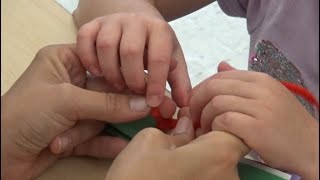
Direct Support
In recent years, Julie has worked directly with children who are Deafblind in both educational and home environments, supporting the development of communication, engagement and access to learning opportunities.
Guiding Belief
Her work is guided by the belief that meaningful communication is the foundation for learning, relationships, independence and quality of life.
Collaborative Support
Support for parents and family members to understand communication, access and participation across everyday routines.
Guidance for classroom teachers, teacher aides and support staff working alongside learners who are Deafblind.
Collaboration with specialist educators to strengthen individualised communication and learning supports.
Consultation with school leadership teams to support shared planning, consistency and meaningful participation.
Julie’s focus is on helping communication partners understand how a person who is Deafblind experiences and interacts with the world, and how communication can be adapted to maximise participation, understanding and independence.
The Life Space Model
A key framework underpinning Julie’s work is the Life Space Model.
Originally developed by Farrell (1995) for learners with visual impairment and subsequently adapted for children and adults who are Deafblind, the model provides a practical way of understanding how communication, learning and participation occur within the environments a person experiences every day.
The model encourages educators and families to consider not only formal learning opportunities, but also the rich communication and learning that takes place across home, school and community settings.
Contributions to the Deafblind adaptation of the Life Space Model are acknowledged from SensesWA.
Individual Communication Planning
Julie regularly utilises Deafblind Individual Communication Handbooks as a tool for documenting and understanding the communication needs of each individual.
These handbooks assist teams to identify current communication methods, document successful adaptations and supports, promote consistency across communication partners, support transitions between settings, and build shared understanding among families and professionals.
Resource Areas
Consultancy and Professional Learning
Julie is available to provide consultation, mentoring and professional learning for families, schools and organisations seeking to strengthen communication and participation for people who are Deafblind.